




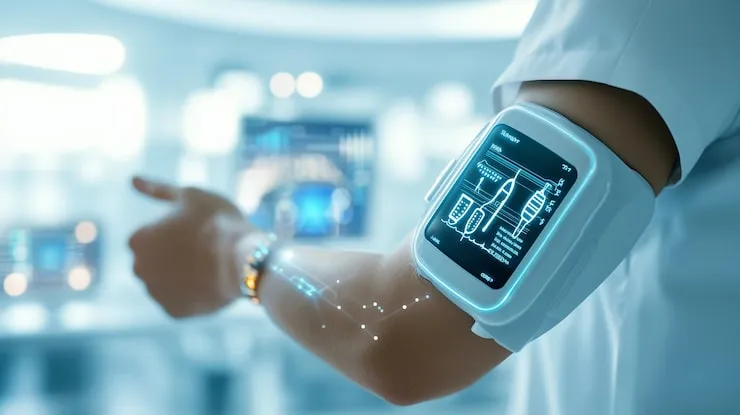
I remember the day I first strapped on a small, sleek device and wondered if it could actually make a difference. Like many of you, I was a little skeptical. Could a watch or a ring really help me understand my body better? After using them for years, and even talking to doctors about them.
I can tell you this: Wearable Health Devices for Better Health are not just a trend. They are powerful tools that have helped me move more, sleep deeper, and actually understand what my body needs. In this post, I am going to share my experience and expert advice on how you can use them too.
My First Step into the World of Wearables
The whole idea began with a very simple intention of walking more. I have purchased a simple fitness tracker watch to track the number of my steps. At first, it felt like a game. I would look at it every time, and attempt to reach that 10,000 steps target. However, shortly I understood that it was not a game.
It was causing me to get off the couch during commercials and park further off at the grocery store. That slight encouragement was my first step towards a massive change in my routine.
You may also read :- Smart Home Gadgets That Save Electricity
| Feature | What It Tracks | Benefit to Me |
|---|---|---|
| Step Counter | Daily steps and distance | Motivated me to move more throughout the day |
| Heart Rate Monitor | Resting heart rate and workout zones | Helped me exercise at the right intensity |
| Sleep Tracker | Hours slept and sleep stages | Showed me how late-night TV hurt my sleep quality |
| GPS | Running and walking routes | Allowed me to explore new paths and track my pace |
Understanding Wearable Health Devices for Better Health
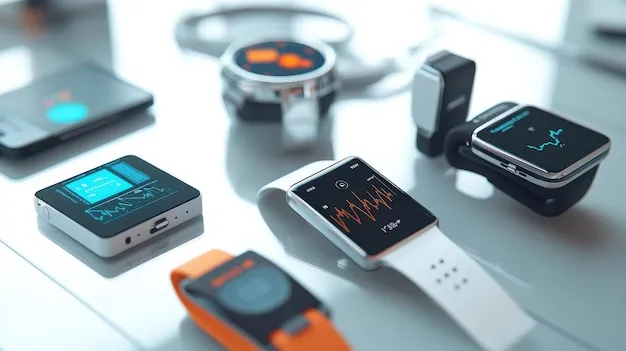
But what is it that these gadgets are? In my case, Wearable Health Devices to Better Health are my mini health coach that I can wear on my finger or wrist.
They have cameras to monitor whatever I do throughout the day and night. They are as rudimentary as a step counter, or as high-tech as medical-grade wearable devices capable of tasks such as taking an ECG (a heart test) .
McLaren Health published an article where Dr. Lauren Vocke, a family medicine physician, has said that such fitness trackers can assist in the early detection of health problems, and it can also give you valuable information about your wellness. It is that concept of insights that caught my attention. It was not about the numbers but it was about what the numbers meant to me.
The Different Types of Health Trackers I Use
I began with a watch, but the wearable technology industry is far greater. The following are some of the types I have sampled or studied:
- Smartwatches and Fitness Trackers: The all-rounders. My smartwatch monitors my steps, my heart-rate when I am running, and it even measures my stress. It is ideal in daily use and keeping in touch .
- Smart Rings: I was impressed with the extent to which a small ring could perform. A smart ring is an excellent device in sleep recording as it is not as massive as a watch. It is tracking my heart rate variability (HRV) and body temperature during sleep and providing a "readiness score" at the start of every morning.
- Continuous Glucose Monitors (CGMs): It turned out to be a revolution in my friend with diabetes, and I tried one to know more about my health. A continuous glucose monitor (CGM) is a device to monitor your blood glucose 24 hours a day. It will display the real-time visuals of how various foods will impact your energy and blood sugar, such as a large bowl of pasta.
- ECG Monitors: There are watches and other special patches that have the ability to measure the rhythm of your heart, such as the Zio monitor that I read about. This is simply incredible in detecting problems such as an irregular heartbeat also referred to as atrial fibrillation.
Tracking More Than Just Steps
At the beginning, I used to take care of just steps. I now apply the health metrics to have a complete picture of my health. These are the things I listen to:
How I Use Heart Rate Data for Better Workouts
The force behind my body is my heart. My smartwatch displays my resting heart rate which is lowest when I am in the state of relaxation and fitness. I also apply heart rate zones during exercise. When I wish to lose weight, I remain in a lower state. When I wish to develop stamina I strive to a greater one. This is much superior to merely guessing whether I am working hard enough or not.
Understanding My Sleep for More Energy
I believed that I was getting enough sleep over the years since I slept eight hours in the bed. My wristwatch proved me wrong. It monitors my sleep phases: light sleep, deep sleep and REM sleep. I observed that on those days when I used the phone before sleep, I could hardly sleep deeply.
It is during deep sleep that your body is healing itself. This information made me finally lay my phone aside an hour before sleep, and I wake up feeling much more rested.
The Future is Here: New Tech I'm Excited About
The field is moving so fast. In 2026, I attended a major technology event known as CES where they reported on awesome new things. Nowadays there are earbuds capable of monitoring the brainwaves (that is known as consumer EEG), which may be useful in focus and meditation.
There are even machines that make your vagus nerve activate to make you relax and be de-stressed. And now you can be warned by a new generation of watches and rings about whether your blood pressure is getting high and that is a massive leap in the right direction towards heart health.
Real Benefits I've Experienced and Science Proves
It is not only myself who thinks so. Science backs it up. A massive trial in the Lancet involved almost 164,000 individuals and discovered that individuals that used activity trackers walked more. They walked an average of 1,800 more per day and also 40 minutes longer. That is amazing!
These devices, in addition to being more active, make me feel more in control of my health. Dr. According to Jeannie Bailey in UC San Francisco, this tracking actually empowers patients and makes them think about their progress. I feel that.
Whenever I notice that my stress levels are increasing on a hectic working day, I realize that I have to take a break and relax by breathing. It assists me in making improved decisions at the moment.
When My Watch Sent Me to the Doctor
This is the aspect that still amaze me. Several months ago, my smartwatch had alerted me that my heartbeat was somewhat irregular. I was alright, but the warning was evident. I would visit my doctor, and after carrying out a few tests, we identified a small problem that we could address at early stages.
My watch did not diagnose me, but it provided me with the data which allowed me to seek help. As Dr. Vocke rightly points out, these gadgets may assist you in developing a better perception of your health, yet they are not necessarily 100 percent accurate, so you will have to discuss the situation with your doctor.
The Challenges I've Faced (And How You Can Avoid Them)
It hasn't all been perfect. I have come to know that there are also a few negativity to watch out.
- Data Anxiety: Initially, I became fanatical about the figures. In the case that I had a low score in sleep, I would be exhausted all day as well as in the case that I felt fine or a lot better, but another suggestion by Dr. Michael Sabia of Cooper University Health Care was not to react on the single-day scores, but use the data and trends to shape long-term habits. This was huge for me. I no longer worried about a single bad night but started to consider the weekly trend.
- Precision Concerns: Sometimes the number of steps appears to be wrong, or the heart rate watch malfunctions. It is important to keep in mind that they are not always flawless medical equipment. They are fantastic at detecting trends, however, when something does not work right, then you have to listen to your body and not the device.
- Privacy Concerns: This technology gathers much personal information. To ensure that my health information is being used, I always look at the privacy policy to determine that my information is safe.
My Top Tips for Choosing Your First Device
Now that you are considering buying one, here is my suggestion and it is based on my experience:
- What is your main goal? Do you want to just walk more? A simple tracker is fine. Do you wish to have better sleep or monitor your heart problems? You may desire a smart watch or a ring equipped with an ECG.
- Comfort is key. You will not wear it because it is uncomfortable. I put my smart ring on at all times since I am unaware of its presence.
- Check the battery life. There are watches that require charging on a daily basis. My smart ring lasts for days. Consider what best fits your lifestyle.
Looking Ahead: What's Next for Wearable Tech?
I am so much excited about the future. The scholars state that AI in the wearables will only become smarter. Your gadget may not simply present you with data, but inform you, "You had an insomniac night, and your HRV is low, so today is a good day to go on a light walk, not a hard run.
According to Safoora Khosravi who is an expert in health technologies, the focus has shifted to how well it translates data to diagnostics, behavior change, and outcomes. It is shifting to following to leading.
Conclusion: Your Health, In Your Hands
In my case, one of the best decisions I have ever made is to adopt the use of wearable health devices to enhance my health. They have made being healthy a daily challenge that is enjoyable. They provide me with the data that I will be able to sleep better, feel less stressed, and exercise more.
They are not magic, they do not replace my doctor but they are a fantastic companion in my trip. Having a curiosity, I would say try one. Begin with the easy stuff and observe the trends and how it can assist you to have a healthy and happier life.
Simple Answers to Your Wearable Questions
Q: Can a fitness tracker save me money by losing weight?
A: Yes, it can help! Research indicates that individuals who use activity trackers move more. It lets you know how many calories you are burning and makes you exercise more, which is a major element of losing weight.
Q: Are smart rings better than smartwatches in health tracking?
A: They are just different. Smart rings are also more useful in sleep tracking since they are more comfortable to wear at night. Smartwatches possess screens that display real-time statistics in the course of a workout. They are both excellent wearable health devices to achieve better health.
Q: Does my wearable have the ability to sense a heart attack?
A: The majority of consumer wearables are unable to identify a heart attack. Still, some of them are capable of noticing that your heartbeat is not regular (atrial fibrillation) and reminding you that you need to visit a doctor. They are used to observe problems that may arise, and not to diagnose an emergency.
Q: Am I supposed to provide my wearable data to my physician?
A: Absolutely. This information is useful to several physicians. Dr. Arjun Athreya of Mayo Clinic is optimistic that that day is not too far off, when any new patient entering our door carrying a wearable device will see us using that data. It will provide them with a far better idea of your day-to-day life than a brief examination in the office.
Q: What is the precision of the sleep trackers on the devices?
A: They are quite trendy in observing trends. They may be not 100 percent precise to measure precise sleep stages as a sleep study in a hospital, yet they are outstanding in demonstrating whether you slumbered better or worse than the previous night and the effects of your habits on your sleep.